Gardening in Mallorca: Autumn Colour and the Olive Harvest in Mallorca
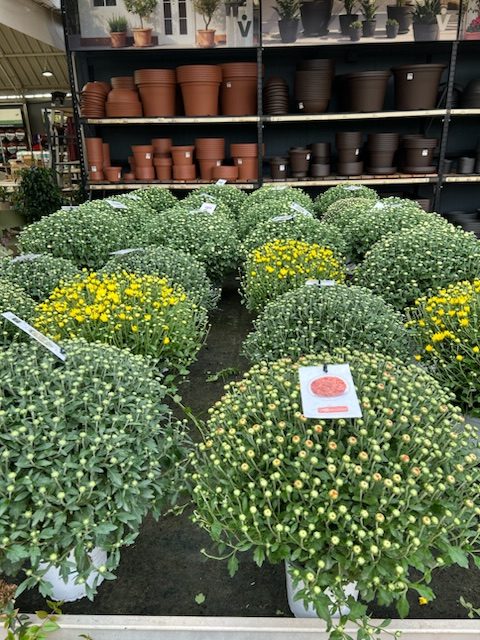
During my first October here on the island, I started to see chrysanthemum plants in the market and garden centres. Huge balls of autumn colour: yellow, burnt orange, and smoky red. Simply gorgeous.
I bought two of these and set them at the entrance to my house to create a seasonal display. Within minutes, a neighbour came to my house with a concerned look on her face. “I’m so sorry. Has someone died?”
I soon discovered the chrysanthemum plants that were everywhere were destined for the cemeteries on the island to decorate the graves of loved ones on All Saints Day. They are beautiful, but their destiny is to give brief pleasure to the dead.
Chrysanthemums bring autumn colour to garden centres across Mallorca, ready to decorate graves for All Saints Day.
Fortunately, we are spoilt for choice when it comes to other autumn flowers. I designed my garden with an emphasis on shades of greens, contrasting shapes, and different textures. But I do like to have splashes of colour that draw the eye. These might be perennials or annual flowers. For example, I will place a group of pots at the end of a path that draws you forward as you walk. Or I might place a large colourful plant opposite an ugly electrical fixture to distract attention. The mix of Begonias and Impatiens
Some years I go for uniform colours, and some I choose a mix of competing shades. Good choices for full sun are snapdragons, daisy-like Asters, French marigolds, Calendulas, and spiky Salvias. For shady spots, I like bedding Begonias, Pansies, Coleus, Impatiens and their cousins New Guinea Impatiens. All the usual suspects, but I love them still.
I often see people in garden centres deliberately choosing the plants with the most open flowers. I used to point out their error, but they would take offence, so I stopped. Their loss. Always choose healthy, smaller plants with unopen buds. These plants are younger and stronger. They will give you a much longer bloom time.
It’s important to place flowerpots near a watering source even in autumn. The rain here is unpredictable, and annuals are always thirsty, no matter which season.
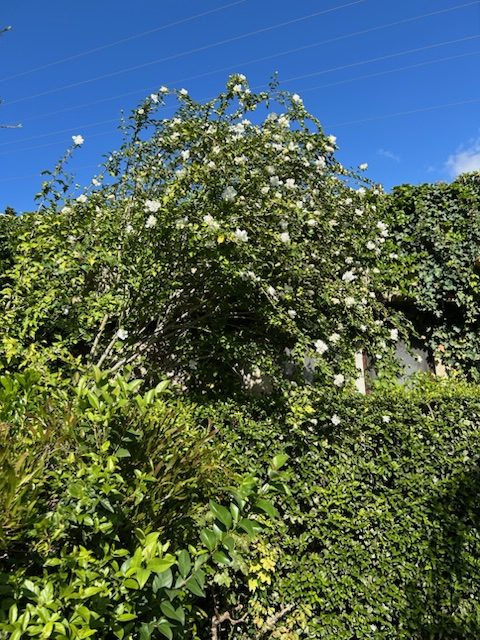
Few trees produce flowers in autumn, but a great choice is Rose of Shannon (Hibiscus syriacus). This bush or tree is related to the tropical Hibiscus we see everywhere on the island. I’m impressed with mine. It’s about ten years old, squished into a corner and mostly visible from a higher terrace. I’ve found it to be drought-tolerant and resistant to insect infestations and diseases. Flowers appear in late summer and continue through autumn. This is not the time to plant trees, but Rose of Shannon is one to consider planting in a few months.
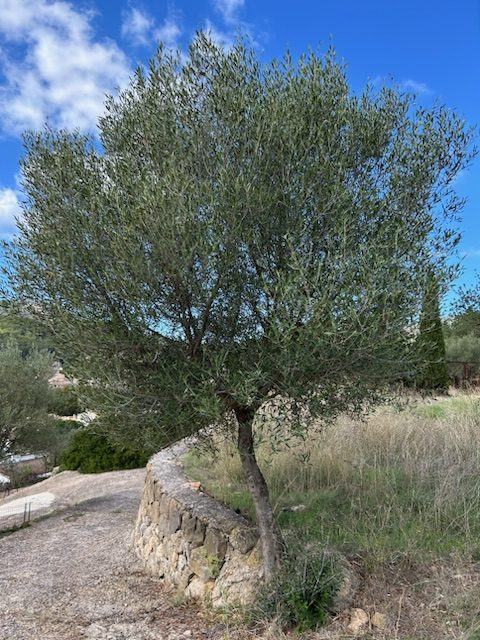
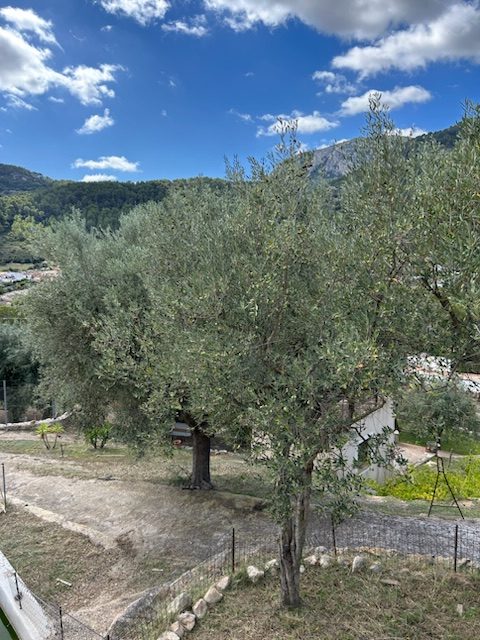
The olive-harvesting season is well underway in Mallorca and will continue through the end of the year. Olives harvested early have the sharpest flavour. Later harvests are more mellow. If the ferocious winds ripping across the island leave us any olives, ours will go to the tajona in November to be crushed into oil.
We have a mix of mostly Mallorquina, Picual, and three Ullastre trees. They were here when we bought the property, and we’ve added new trees over the years. This combination of olives is traditional on the island. Ullastre is the name of the wild olive tree in the Mallorquin language. In Spanish, they are called acebuche.
You will see acebuche bushes growing wild all over the island and may even have some in your own garden. The olives are tiny. Many people don’t bother to press these olives because they’re so small and not productive. It takes about 20 to 30 kilos of wild olives to make a litre of oil. Cultivated varieties are more productive, with just 4 to 5 kilos to produce the same litre.
On the plus side, 100% organic wild olive oil can sell for as much as €60 a litre. The taste is stronger, more earthy, and the oil has many medicinal qualities not found in ordinary olive oil.
If you have wild olive bushes, you might consider bringing them into production. I have begun this process. In November, we will disgard the tiny olives and prune the bushes into trees. This should increase the size of the individual olives in coming years, thus increasing the amount of oil in the future. A few years of doing this, and the trees may be worth harvesting. We shall see.
If you’ve got the space, and you have the pacience to wait a few years, it’s great to continue the island tradition of growing olives. A mix is always preferable. Arbequina has smoother flavour, but Picual produces more oil. Both work well here. As does, Empeltre, the local variety. Check out all the varieties before deciding on the mix that will suit your taste best.